
Farm Feud
ARK GAME LIMITEDSimulation
4.815.00 Reviews
- Version
- 30.91.367
- Installs
- 100.00K
- Age Rating
- Everyone
Screenshots




Our Review of Farm Feud
 Analysis by Appyee
Farm Feud is a social simulation game from ARK GAME LIMITED that puts a competitive spin on the familiar farm-and-board-game formula. I approached it expecting a light way to pass a few minutes, but the rivalry angle quickly became the part that shaped my opinion. The appeal is not simply building up a farm; it is deciding when to play safely, when to challenge another player, and how much attention I want to give a session.
The game is free to download and is rated for Everyone, which makes it easy to consider for casual family play or a quick group activity. It supports Android devices running version 6.0 or later, and the current version is 30.91.367. Its store presence is still relatively modest, with over 100 thousand installs, but the visible response is strong: the game holds a 4.8 average from around 273 ratings. I treat that as encouraging rather than conclusive, because a smaller rating pool cannot tell me how every type of player will feel after extended use.
How Farm Feud feels when the farm becomes a contest
The central idea works because it combines two moods that do not always appear together. Farming suggests steady progress, collection, and routine. A board-game structure suggests turns, choices, and the possibility that another player can interfere with my plans. Farm Feud uses that contrast to make ordinary progress feel more meaningful. I am not only asking what I can build or earn next; I am also thinking about whether another player is about to benefit from my work.
That social layer is the reason I would recommend it to someone who enjoys friendly competition more than solitary management. A traditional farming simulator is usually at its best when I can relax into long-term planning. Here, the satisfaction comes from reacting to the contest as well as improving my own position. If you like games where a small decision can change the mood of a session, this setup has more personality than a purely decorative farm.
At the same time, I would not confuse the game with a deep agricultural simulator. The farm theme is the setting for a social board experience, not an attempt to reproduce every detail of crop management or rural business. Players looking for detailed production chains, realistic seasons, or a slow, almost meditative routine may find a conventional farming game more suitable. Farm Feud is better understood as a compact competitive game wearing a farm costume.
The first useful habit: separate progress from impulse
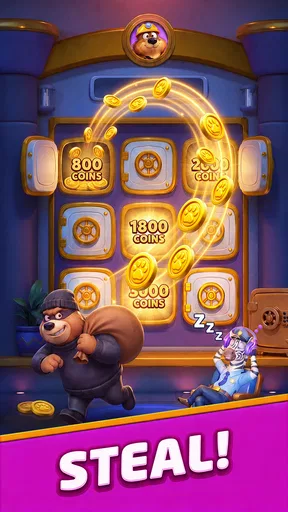
My most practical advice is to treat every reward as a decision rather than an automatic reason to spend or act immediately. In a game built around raids and rewards, the tempting move is often the most visible one. I found it more useful to pause and ask whether the action improves my position now or merely feels exciting. That distinction matters in social games because a flashy move can leave me with fewer options for the next encounter.
This is also where the board-game influence helps. I do not need to approach every moment as if it were a permanent commitment. A short session can be used to learn how the competition behaves, while a longer session is better for testing a preferred approach. New players should resist trying to imitate the most aggressive player in their group straight away. It is wiser to watch which actions create reliable progress and which ones only produce a temporary advantage.
A second tip is to choose opponents and timing with patience. Raiding rivals sounds naturally dramatic, but the best target is not always the player who appears strongest or most active. A rival who is constantly pushing forward may also be difficult to predict, while a quieter player may be easier to read. I would use early sessions to notice patterns rather than chasing every available opportunity. That turns the social element into a game of observation instead of a series of hurried clicks.
Where the free-to-play model changes the experience
Farm Feud is free to play, but it includes optional purchases priced from $0.99 to $199.99 per item. That is the most important financial detail for anyone deciding whether to install it. The range runs from a very small purchase to a notably large one, so I would approach the game with a personal spending rule before starting. For me, that means deciding in advance whether I am playing entirely without purchases or allowing only a fixed, comfortable amount.
I appreciate that the purchase range is stated clearly enough to show that the game is not limited to small add-ons. I would not, however, assume that a free download automatically means a completely pressure-free experience. The presence of in-app purchases can influence how a player views progress, especially in a competitive setting where rewards and rivals are part of the appeal. I would keep purchase confirmation protected on a shared device and avoid making a decision while trying to recover from a disappointing round.
The fair way to judge the spending question is to distinguish access from acceleration. A free entry point is useful for testing whether the social style suits me. It lets me decide whether I enjoy the board-game rhythm before committing anything. But the existence of high-priced items means I would not recommend treating purchases as a normal part of keeping up with friends. If the game remains enjoyable without spending, that is a meaningful strength. If I feel pushed to pay simply to stay involved, the value changes quickly.
Because the available facts establish the purchase range but do not explain what each item provides, I would avoid promising that spending is cosmetic, necessary, or advantageous in competition. That is an important boundary for a responsible review. My practical recommendation is to play long enough to understand the normal pace first, then decide whether any optional purchase genuinely improves enjoyment rather than merely shortening waiting or easing frustration.
Can the rivalry feel fair?
Fairness is the question I would ask before inviting friends into any competitive social game. Farm Feud has the ingredients for enjoyable rivalry because the farm theme makes the conflict approachable, and the board-game format gives each session a clear sense of movement. Yet fairness depends on how the game balances player choices, rewards, and paid options. The confirmed purchase information alone does not reveal whether purchases affect competitive strength, so I would not claim that the game is either fully skill-based or pay-to-win.
That uncertainty does not make the game unusable; it simply changes how I would play it. I would begin with low expectations about competitive equality and judge the experience through repeated sessions. Do victories seem connected to decisions I understand? Can a player who spends nothing still make sensible progress? Do raids feel like clever interaction, or do they mainly punish whoever has fewer resources? Those are the observations that matter more than a high rating when fairness is the deciding factor.
There is a useful social advantage here. Playing with people I know gives me a better way to evaluate the rivalry than entering a contest with strangers and immediately blaming the system. Friends can agree on a relaxed approach, avoid turning every raid into a personal grudge, and compare experiences honestly. If one person spends and another does not, I would keep that difference in mind when deciding whether the match is a fair comparison.
For younger players, the Everyone rating makes the game broadly approachable, but the spending range still deserves adult attention. An age rating describes content suitability, not financial judgment. I would make sure the person using a shared phone or tablet understands that the game contains optional purchases and that free access does not mean every on-screen opportunity is free. That small conversation can prevent the most avoidable problem associated with this type of game.
Everyday use: a quick visit or a group ritual
I can see Farm Feud working well in a few different routines. Someone waiting for a train could use it as a short competitive distraction, while a group of friends could check in during the day and compare their progress. The game’s strongest use case is probably the second one: people who enjoy having a shared activity but do not want to arrange a full tabletop session with pieces, cards, and a fixed meeting time.
Imagine three friends who each have a few spare moments after work. Instead of starting a long strategy game that requires everyone to be available together, they can use Farm Feud as a lighter point of contact. One person makes progress, another notices an opportunity to challenge a rival, and the conversation continues outside the game. That scenario suits the social premise far better than playing alone while ignoring the competitive side.
There is a trade-off in that convenience. A physical board game gives everyone the same visible information and usually creates a clear beginning and end. A mobile game can be easier to access, but it may encourage repeated checking. I would recommend setting a natural stopping point rather than opening the game every time there is a notification or a new reward. That keeps the farm from becoming a chore and makes the social sessions feel intentional.
What separates it from ordinary farming games
Compared with a standard mobile farming simulator, Farm Feud appears designed around interaction rather than peaceful accumulation. In a conventional alternative, I might focus on decorating a farm, optimizing production, or completing a personal set of goals. Here, the presence of rivals changes the value of progress because another player is part of the story. That makes the game more exciting for competitive personalities, but less calming for anyone who wants a completely private pace.
Compared with a pure digital board game, the farm setting gives the competition a softer identity. The theme can make raids and rewards feel less abstract than moving pieces around a generic track. The compromise is that players seeking a tightly structured strategy board game may want clearer depth, more deliberate planning, or a stronger emphasis on a single match. Farm Feud sits between those categories: more social and confrontational than a quiet farm builder, but more casual and themed than a dedicated strategy title.
That middle position is also why expectations matter. I would not install it hoping for a detailed simulation, and I would not choose it when I want a serious tournament-style board game. I would choose it when I want farming visuals, quick decisions, and a reason to compare progress with other people. The game succeeds or fails according to that narrower promise.
Small strategies that make the experience less frustrating
My first strategy would be to learn the reward rhythm before spending anything. Even without knowing every system in advance, I can identify which actions feel repeatable and which ones depend on a lucky or unusually favorable moment. That information helps me avoid paying to solve a problem that may disappear naturally after I understand the game better.
My second strategy would be to keep a clear difference between social play and personal progress. If I am playing with friends, I would agree on whether the goal is friendly mischief or serious competition. Raiding can be entertaining when everyone understands the tone, but it can become unpleasant when one player treats every advantage as an obligation to attack. A little coordination protects the social part of the game, which is the reason to choose it over a solitary alternative.
My third strategy would be to judge purchases by time and enjoyment, not by the size of the reward. A large bundle can look attractive because it promises immediate progress, but the useful question is whether it gives me more enjoyable decisions or simply removes the need to make them. In a board-inspired game, too much acceleration could reduce the very tension that makes the next move interesting. I would rather preserve a manageable challenge than buy my way past the learning curve.
Finally, I would keep expectations modest about long-term commitment. The game has a current version of 30.91.367 and a growing audience, but a rating count of around 273 is still a small basis for predicting how the wider community will develop. I would install it because the concept appeals to me now, not because I expect a guaranteed permanent group or an established competitive scene. That is a healthier way to approach any social mobile game.
Who should try it, and who should skip it?
I think Farm Feud is a good fit for players who enjoy light simulation, friendly rivalry, and games that can be visited in short bursts. It is especially appealing if the idea of improving a farm becomes more interesting when another player can challenge, raid, or outpace me. People who like comparing progress with friends without committing to a long tabletop session should find the concept easy to understand.
I would be more cautious recommending it to players who dislike in-app purchases on principle, even when the download is free. The available item range reaches $199.99, and that alone is enough reason to use spending controls and a firm budget. I would also point traditional farming fans toward a more peaceful alternative if their priority is relaxation, decorating, or detailed management without rivalry.
Players who need transparent competitive rules before investing time should also proceed slowly. I can assess the general feel through play, but I would not promise a specific balance between free and paid progress. That is not a criticism of the concept; it is a reason to evaluate the actual experience personally instead of assuming that a strong average rating answers every fairness question.
My trust verdict after weighing the trade-offs
What I like most about Farm Feud is its clear identity. It is not pretending to be only a farm builder or only a board game. Its appeal comes from putting social competition into a familiar agricultural setting, and that gives casual sessions a reason to continue. The Everyone rating, free entry, and Android compatibility from version 6.0 onward make it approachable for a broad audience.
What keeps my recommendation measured is the purchase structure. Optional items range from $0.99 to $199.99, while the available information does not establish how those items influence progress or rivalry. I would therefore recommend trying the game without spending first, using device safeguards, and watching whether the competitive loop remains enjoyable on its own. That approach protects both my budget and my ability to judge the game fairly.
My final view is positive, with conditions. Farm Feud is worth trying if you want a social farming game where the next decision can affect a rival, not just your own virtual property. I would recommend it to friends who enjoy casual contests and shared routines, but I would not present it as a replacement for a deep farming simulator or a rigorously balanced strategy board game. Its best qualities are its approachable theme and competitive energy; its biggest question is how comfortable each player feels with the optional spending model.
If I were handing my phone to a friend, I would say: start free, play patiently, learn the pace, and decide later whether the rivalry is genuinely fun. If it is, the game can become a pleasant social habit. If every session feels like pressure to catch up or pay more, a quieter farming game will probably be the better choice.
Verdict
Strengths of Farm Feud
- Simple mechanics make it easy for new players to start quickly.
- Short rounds fit well into quick gaming sessions.
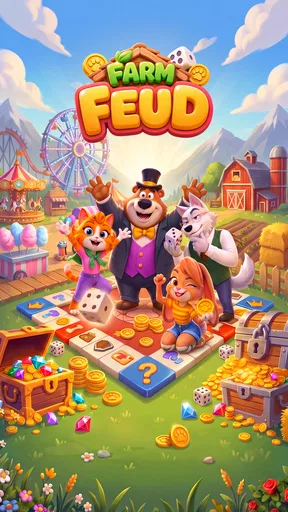
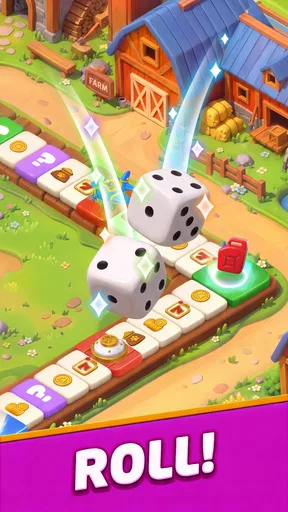
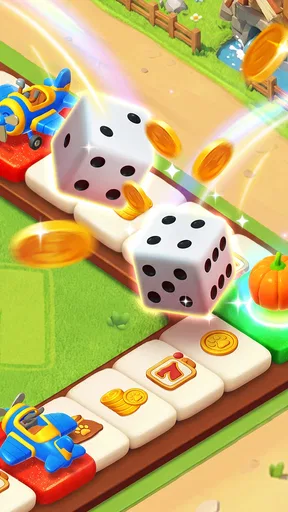
- Colorful farm-themed visuals give the game a cheerful atmosphere.
- Progression provides a clear reason to keep completing levels.
- Playable on mobile devices without requiring advanced gaming skills.
Limitations of Farm Feud
- Some levels may feel repetitive after extended play.
- Later challenges can become noticeably more difficult.
- Frequent advertisements may interrupt the gameplay experience.
- Limited variety can reduce long-term replay value.
- Performance may vary on older phones or tablets.
Other Releases by ARK GAME LIMITED
View All
Fishing Travel
Casual4.5

Tavern Master
Strategy4.3
Similar Picks in This Category
View All
Truckers of Europe 3
Wanda Software4.3

Town Building Life Simulator
XGame Global4.2

Fidget Toys Trading・Pop It 3D
Freeplay Inc4.7

Sculpt People
CrazyLabs LTD4.4

Scary Teacher 3D
Z & K Games4.2

Hair Tattoo: Barber Shop Game
CASUAL AZUR GAMES4.3
Frequently Asked Questions
What is Farm Feud and how is the gameplay structured?
Farm Feud is a casual farming and strategy game centered on building, managing, and expanding your own farm. You typically plant and harvest crops, raise animals, complete objectives, and use collected resources to improve buildings or unlock new content. The game is easy to begin, although progress can require planning because storage, time, and available resources must be managed carefully.
Can Farm Feud be played offline?
Farm Feud may allow some basic gameplay features to work without a constant internet connection, depending on the version and device. However, online access is generally recommended for saving progress, receiving updates, synchronizing data, accessing events, and using social or competitive features. Before relying on offline play, test the game after disabling your connection, since certain functions may require an active network.
Is Farm Feud free to download, and does it include in-app purchases?
Farm Feud is generally available as a free download, but free access does not necessarily mean that every item or feature is available without payment. Games in this category commonly offer optional purchases for premium currency, boosters, extra resources, or faster construction and production. You can usually play without spending money, although progression may take longer and advertisements or purchase prompts may appear.
Does Farm Feud contain advertisements or require an account?
Farm Feud may display advertisements, particularly when offering optional rewards such as additional coins, energy, or speed boosts. Some versions may also request an account or connection to a platform such as Google Play Games or Game Center to protect progress and enable synchronization. Check the permissions and sign-in options during setup, especially if you prefer not to link the game to a personal account.
What devices are compatible with Farm Feud, and is much storage required?
Compatibility depends on the specific Farm Feud release and its latest update, so you should confirm the Android or iOS requirements on the official download page before installing. A relatively recent device with an updated operating system should provide the smoothest experience. Keep additional free storage available because updates, cached files, and downloaded game assets can require more space than the initial installation.
Play our best games!


